Noom Unveils Noom Band, a Screenless Wearable Bundled Into Its Employer Obesity Programs
Noom will include Noom Band, a screenless tracker built with Sensor Bio, at no extra cost in its employer and health-plan obesity programs from early 2027. The company says GLP-1 members using a wearable were 34% more likely to lose 20 pounds by month four.
Founding Editor & Reporter
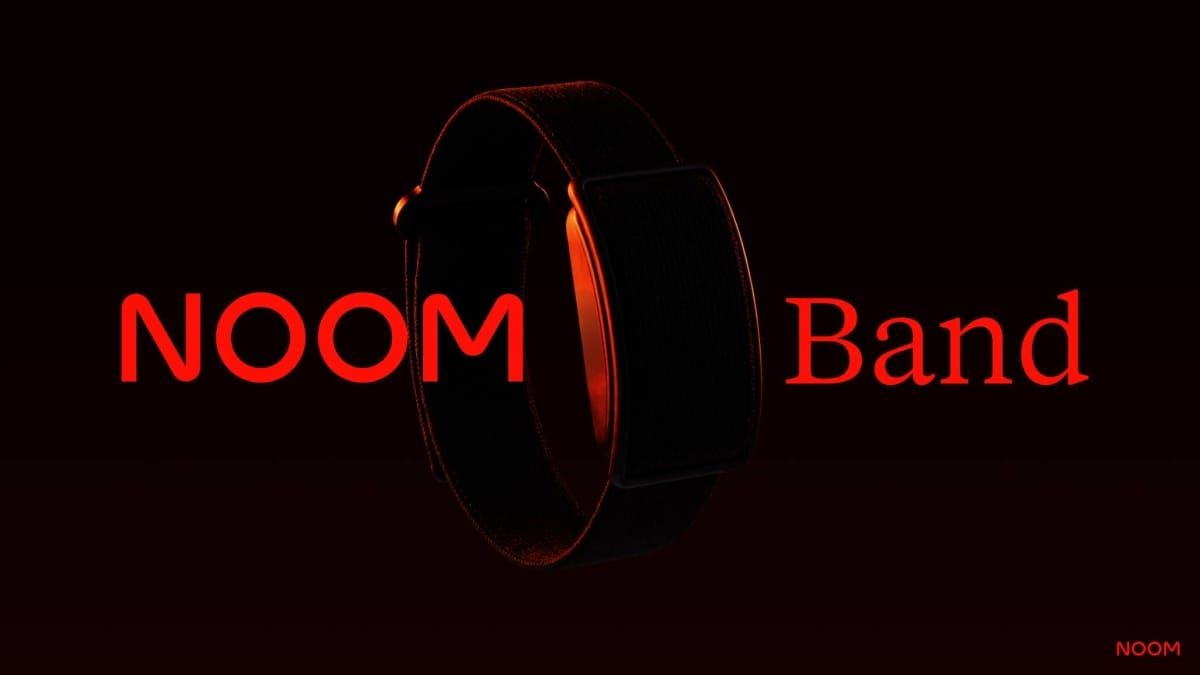
Noom, the weight-loss and behavior-change company, has unveiled Noom Band, a screenless wrist wearable that it will include at no extra cost in its obesity and metabolic-health programs for employers and health plans, the company announced on November 16, 2026, at the HLTH conference in Las Vegas. The band is built with Sensor Bio, the Austin, Texas, company formerly known as Biostrap.
Noom Band is due to launch in early 2027, and the company says it will be included for all of its employer and health-plan clients that year. Unlike most fitness trackers, it is aimed at people managing their weight, many of them on GLP-1 drugs, rather than at athletes.
What Noom Band Does
The band has no screen. It tracks activity, sleep, heart rate and heart rate variability (HRV, the beat-to-beat variation often used as a rough signal of stress and recovery) and feeds the trends into Noom's app and coaching program. Sensor Bio's hardware also captures blood-oxygen levels (SpO2), and the company gives partners raw sensor data through its software tools.
“Better health outcomes start with better data,” said Sameer Sontakey, founder of Sensor Bio. Cody Fair, Noom Health's chief commercial officer, described the band as a tool built to deliver health outcomes rather than a fitness perk.
What the Company Reports
- Weight loss: among Noom members on GLP-1 medication, those using a connected wearable were 34% more likely to have lost 20 pounds by month four. Noom says these data have not been peer-reviewed.
- Sleep: GLP-1 members using Noom Band slept about 90 more minutes per week after two months; those who started with a sleep deficit gained about 150 minutes.
- Trial: in a study of 499 members, sleep rose by an average of about 13 minutes per night.
How to Read It
All of these figures come from Noom. The weight-loss comparison is observational: people who choose to wear a tracker are likely more engaged to begin with, so the 34% gap can't show that the device caused the extra weight loss. The release does not describe the 499-member study's design or whether it had a control group. Noom also gave no detail on battery life, the band's price to consumers, or whether it will be sold outside employer and health-plan programs.
What This Means
Bundling a wearable into a payer-funded program is a familiar strategy in digital health: the device gives the coaching program more data and gives members a daily reason to open the app. It also puts Noom alongside Oura, Withings and Whoop, which are pairing body data with access to clinicians, as weight-management and GLP-1 care move toward continuous tracking. Whether the band improves results will depend on data Noom has not yet published.
At a Glance
- Product: Noom Band, a screenless wrist wearable
- Partner: Sensor Bio (formerly Biostrap), Austin, Texas
- Tracks: activity, sleep, heart rate, HRV
- Who gets it: members of Noom's employer and health-plan programs, at no extra cost to the payer
- Launch: early 2027
- Company data: 34% higher odds of losing 20 lb by month four with a wearable (not peer-reviewed)
Source: Noom press release, November 16, 2026; Fitt Insider, November 16, 2026.
Disclaimer
This content is for informational and educational purposes only and is not medical advice. Always consult a qualified healthcare professional before making changes to your health.